
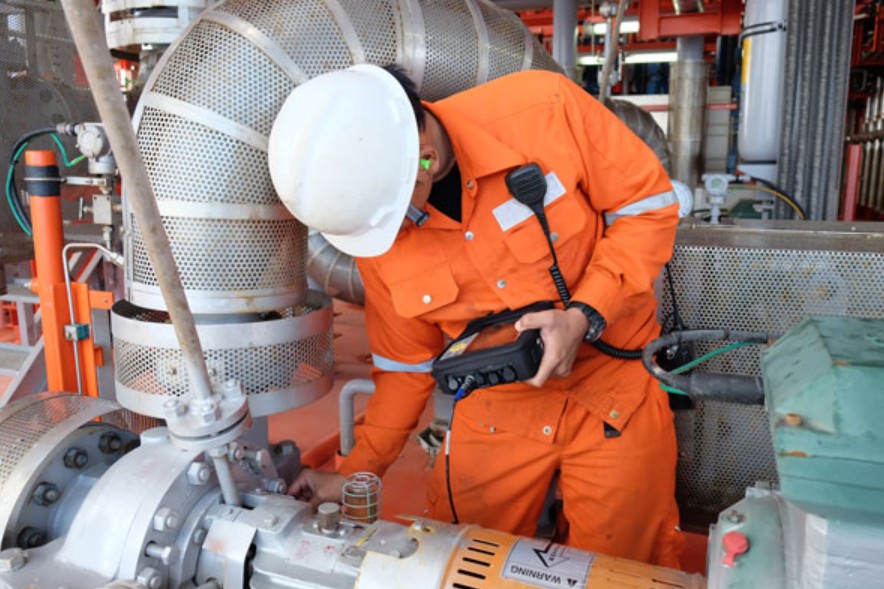
As the global energy sector pivots toward hydrogen, operators face a critical challenge: can their existing pressure vessels, piping systems, and storage infrastructure safely handle hydrogen service? Hydrogen fitness for service assessment provides the engineering answer, a rigorous, code-based methodology to evaluate whether aging equipment remains fit for continued operation under hydrogen-induced degradation mechanisms. At Ideametrics, we deliver these assessments using the full framework of API 579 / ASME FFS-1, the industry’s most comprehensive standard for evaluating equipment integrity.
In This Article
- Why Hydrogen Demands Specialized FFS Assessment
- Hydrogen Embrittlement Assessment: Identifying the Threat
- API 579 Hydrogen Assessment: The Governing Framework
- Hydrogen Crack Assessment & Crack Growth Analysis
- Remaining Life Assessment for Hydrogen Service
- Hydrogen Pipeline Integrity Assessment
- Hydrogen Storage Vessel FFS
- Hydrogen Infrastructure Integrity Engineering
- Repurposing Existing Natural Gas Pipelines for Hydrogen Service
- Why Operators Choose Ideametrics
Why Hydrogen Demands Specialized Fitness-for-Service Assessment
Hydrogen is not just another process gas. Its small molecular size, high diffusivity, and ability to interact with the microstructure of steel at the atomic level create degradation mechanisms that do not exist or behave very differently in conventional hydrocarbon service. Equipment that has operated safely for decades in natural gas or refinery service may be wholly inadequate once exposed to high-purity or high-pressure hydrogen.
This is where hydrogen service FFS becomes essential. A standard fitness-for-service evaluation assesses flaws such as metal loss, pitting, and cracking. A hydrogen-specific FFS assessment goes further; it accounts for material susceptibility to hydrogen-assisted damage, the accelerated kinetics of subcritical crack growth, and the reduced fracture toughness that hydrogen can impose on otherwise ductile steels. Without addressing these mechanisms, conventional FFS results can be dangerously unconservative.
As global energy transition projects accelerate, operators are increasingly evaluating whether existing industrial infrastructure can be safely repurposed for hydrogen transport, storage, and processing. This has elevated hydrogen infrastructure integrity engineering from a specialized engineering discipline into a strategic operational requirement for refinery operators, pipeline owners, gas transmission companies, and energy infrastructure developers.
In many hydrogen transition projects, assets originally designed for natural gas or hydrocarbon service are now being reassessed for entirely different degradation environments. The engineering challenge is no longer limited to pressure containment alone it now includes hydrogen-assisted crack propagation, embrittlement susceptibility, cyclic fatigue interaction, and long-term integrity validation under hydrogen exposure.
100×
Faster crack growth rates are possible in hydrogen vs. air
30–50%
Reduction in fracture toughness in susceptible steels
700+
Bar operating pressure in emerging H₂ storage systems
Hydrogen Embrittlement Assessment: Identifying the Hidden Threat
Hydrogen embrittlement assessment is a foundational step in any integrity evaluation of hydrogen-exposed equipment. Hydrogen embrittlement (HE) occurs when atomic hydrogen diffuses into the metal lattice, concentrating at stress risers, grain boundaries, and ahead of crack tips. This interaction reduces the material’s ductility and fracture resistance, often without any visible warning signs until a sudden, brittle failure occurs.
Several distinct mechanisms fall under the hydrogen embrittlement umbrella, and a thorough assessment must consider each:
- Hydrogen-Enhanced Decohesion (HEDE): Hydrogen weakens atomic bonds at grain boundaries and interfaces, promoting intergranular cracking.
- Hydrogen-Enhanced Localized Plasticity (HELP): Hydrogen concentrations near crack tips reduce the local stress required for dislocation movement, leading to localized plastic flow and premature fracture.
- Hydrogen-Induced Cracking (HIC) & Stepwise Cracking (SWC): Molecular hydrogen accumulates at inclusions and laminations, generating internal pressure that nucleates blisters and cracks, especially relevant in sour or wet hydrogen service.
- High-Temperature Hydrogen Attack (HTHA): At elevated temperatures, hydrogen reacts with carbides in carbon and low-alloy steels to form methane, causing irreversible internal damage, addressed specifically in API 941.
At Ideametrics, our hydrogen embrittlement assessment protocol integrates material testing data (slow strain rate testing, fracture mechanics specimens in hydrogen environments), operational history, and process conditions to determine whether a component’s material is susceptible and if so, to what degree the effective mechanical properties are degraded. This degraded property set then feeds directly into the API 579 fitness-for-service assessment framework.
In real industrial environments, hydrogen embrittlement risks are often underestimated during early hydrogen conversion planning. Assets that previously operated safely for decades may begin experiencing accelerated crack propagation once exposed to hydrogen-rich environments. In several hydrogen repurposing studies globally, engineering teams discovered that pipelines considered acceptable under natural gas service required significant derating after hydrogen-assisted crack growth analysis revealed substantially reduced remaining life.
API 579 Hydrogen Assessment: The Governing Framework
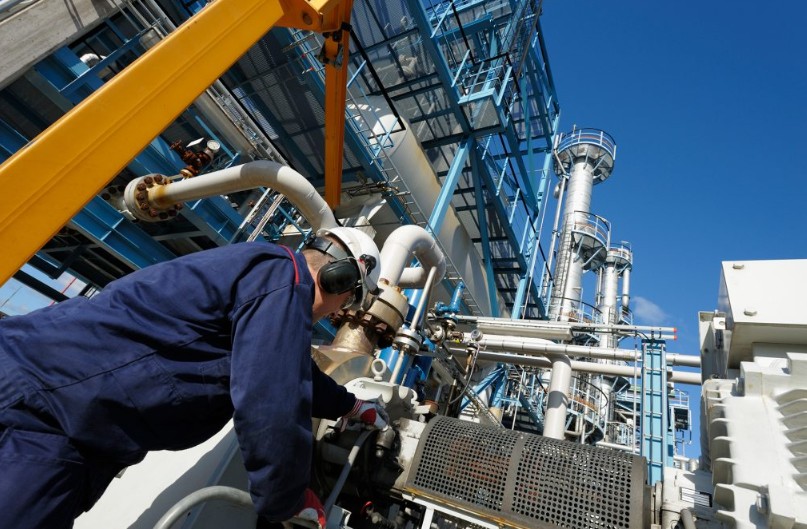
API 579 hydrogen assessment applies the multi-level evaluation methodology of API 579-1/ASME FFS-1 to equipment operating in hydrogen environments. API 579 is uniquely suited for this purpose because it is the only widely accepted standard that provides structured assessment procedures for flawed in-service equipment, accounting for the actual damage state rather than relying solely on original design assumptions.
When applied to hydrogen service, the API 579 framework addresses several critical assessment levels:
Level 1 – Screening Assessment
Uses conservative look-up curves and screening criteria to determine if a flaw is acceptable without detailed analysis. For hydrogen service, Level 1 screening may reference material susceptibility criteria from API 941 and owner-operator experience.
Level 2 – Standard Engineering Assessment
Applies established analytical methods (reference stress solutions, Failure Assessment Diagrams) with hydrogen-specific material properties. This is where hydrogen-degraded fracture toughness values (KIH) and environment-specific crack growth rate data enter the evaluation.
Level 3 – Advanced Assessment
Uses finite element analysis, probabilistic methods, or detailed fracture mechanics to handle complex geometries, loading conditions, or non-standard flaw configurations. Level 3 is often required for high-pressure hydrogen storage and pipeline components.
Key API 579 assessment parts relevant to hydrogen service include Part 9 (Assessment of Crack-Like Flaws) and Part 10 (Assessment of Components Operating in the Creep Range), as well as Part 12 for dent-gouge combinations in pipelines. Ideametrics’ engineers apply these assessments daily; our deep experience with API 579 FFS methodology ensures that every evaluation captures the hydrogen-specific nuances that generic assessments miss.
Hydrogen Crack Assessment & Pipeline Crack Growth Analysis
Hydrogen crack assessment is arguably the most technically demanding element of any hydrogen FFS evaluation. Cracks in hydrogen service do not behave the way they do in benign environments. The threshold stress intensity factor for crack initiation (KIH) can be dramatically lower than the conventional KIC value, and subcritical crack growth rates in gaseous hydrogen can exceed those measured in air by one to two orders of magnitude.
Hydrogen Pipeline Crack Growth Analysis
Hydrogen pipeline crack growth analysis deserves special attention because pipeline systems experience fluctuating pressures that drive fatigue-based crack extension. In hydrogen environments, this fatigue crack growth is superimposed with hydrogen-assisted cracking, creating a synergistic effect that accelerates flaw propagation well beyond what conventional fatigue models predict.
Our crack growth analysis methodology includes:
- Characterization of the initial flaw (size, shape, orientation, location) using inline inspection (ILI) data, phased array ultrasonics, or TOFD.
- Selection of appropriate crack growth rate models for hydrogen environments (e.g., modified Paris law parameters for H₂ gas, using data from ASME B31.12 and SAND reports).
- Determination of hydrogen-environment fracture toughness (KIH) based on material grade, hydrogen partial pressure, temperature, and loading rate.
- Integration of these parameters into Part 9 of API 579 to determine both the current acceptability of the flaw and its projected growth over time.
This analysis directly supports the remaining life calculation and establishes inspection intervals that are physically meaningful, not arbitrarily conservative.
Hydrogen pipeline inspection strategies also become increasingly important as crack growth behavior changes under hydrogen exposure. Advanced NDE methodologies such as phased array UT, TOFD, acoustic emission monitoring, and high-resolution inline inspection are becoming critical tools in hydrogen pipeline integrity assessment programs.
Remaining Life Assessment for Hydrogen Service Equipment
Remaining life assessment for hydrogen service answers the most important operational question: how much longer can this component safely operate before a flaw reaches its critical size? In hydrogen environments, this question is harder to answer — and more critical to get right — because damage accumulation is often non-linear and strongly dependent on process conditions.
The remaining life calculation integrates three core inputs: the current flaw dimensions (from inspection), the crack growth rate model (hydrogen-specific), and the critical flaw size (determined by the hydrogen-degraded fracture toughness and the applied stress field). The output is a time-to-failure or a number of remaining pressure cycles, which then drives decisions on run/repair/replace and determines the next required inspection date.
Why remaining life accuracy matters in hydrogen service:
Underestimating crack growth by using air-environment data can lead to catastrophic failure between inspection intervals. Overestimating it by applying worst-case literature values can result in unnecessary shutdowns and tens of millions of dollars in premature equipment replacement. Ideametrics’ approach uses the best available hydrogen-specific material data, proprietary test results where available, validated correlations where they are not, to provide remaining life predictions that are both safe and economically rational.
Hydrogen Pipeline Integrity Assessment: Repurposing & New Build
Hydrogen pipeline integrity assessment is at the forefront of the energy transition. Governments and operators worldwide are evaluating whether existing natural gas transmission pipelines can be repurposed for hydrogen blending or pure hydrogen transport. This is not a simple material substitution; it requires a comprehensive integrity assessment that evaluates:
- Material suitability: Grade-by-grade evaluation of the pipeline steel’s susceptibility to hydrogen embrittlement, including hardness, microstructure, and inclusion content.
- Existing flaw population: Reassessment of known defects (corrosion, dents, gouges, weld anomalies) under hydrogen-specific acceptance criteria.
- Fatigue and pressure cycling: Evaluation of hydrogen-enhanced fatigue crack growth under the expected operating pressure profile.
- Seal and joint integrity: Assessment of flanges, gaskets, threaded connections, and compression fittings for hydrogen leak tightness.
- Regulatory alignment: Compliance with ASME B31.12 (Hydrogen Piping and Pipelines), applicable API standards, and regional codes.
Ideametrics provides end-to-end hydrogen pipeline integrity assessment services, from initial screening studies and desktop material reviews through detailed FFS assessment of individual features, to the development of ongoing integrity management plans that account for hydrogen-specific degradation.
Repurposing Existing Natural Gas Pipelines for Hydrogen Service
One of the largest engineering questions emerging globally is whether existing natural gas infrastructure can safely transition into hydrogen service without complete replacement. While repurposing offers substantial economic advantages compared to new-build hydrogen infrastructure, the integrity implications are significant.
Pipelines originally designed for methane transport may contain weld defects, inclusions, laminations, or cyclic fatigue damage accumulated over decades of service. Under hydrogen exposure, these flaws may experience accelerated crack propagation rates that were never considered during the original design basis.
Hydrogen pipeline repurposing, therefore, requires:
- Detailed material characterization
- Hydrogen compatibility screening
- Crack growth reassessment using hydrogen-specific fracture mechanics
- Remaining life reassessment
- Validation of operating pressure envelopes
- Hydrogen leak-tightness assessment
- Review of compressor station and flange integrity
Engineering-led hydrogen fitness-for-service assessment is becoming one of the most critical technical gateways in large-scale hydrogen transition projects worldwide.
Hydrogen Storage Vessel FFS: High-Pressure Containment Integrity
Hydrogen storage vessel FFS assessments address some of the most demanding structural integrity challenges in the hydrogen value chain. Hydrogen storage vessels, whether stationary bulk storage at production facilities, tube trailers for distribution, or underground salt cavern wellhead assemblies, operate at pressures that amplify every hydrogen-related degradation mechanism.
Hydrogen pressure vessel fitness for service evaluation is especially critical for Type I (all-metal) vessels, where the steel shell is the sole barrier against hydrogen release. Our assessments cover:
- Crack-like flaw evaluation per API 579 Part 9, with hydrogen-degraded material properties.
- Assessment of general and local metal loss (Parts 4 and 5) with consideration of hydrogen-enhanced corrosion rates.
- Evaluation of misalignment, bulging, and out-of-roundness (Part 8) under internal hydrogen pressure.
- Remaining life projections accounting for cyclic pressurization in hydrogen gas.
For newer composite-overwrapped vessels (Type III and IV), the assessment focus shifts to liner integrity, permeation rates, and the structural contribution of the composite shell, areas where Ideametrics collaborates with specialized testing laboratories to deliver integrated assessments.
Hydrogen Infrastructure Integrity Engineering: A Systems Approach
Hydrogen infrastructure integrity engineering extends beyond individual equipment items to encompass the entire hydrogen production, transport, storage, and utilization system. An isolated vessel assessment, no matter how thorough, is only part of the picture. True integrity assurance requires a systems-level view that connects:
- Design verification: Confirming that original design assumptions remain valid for hydrogen service conditions or quantifying where they fall short.
- Inspection program design: Selecting inspection methods (phased array UT, TOFD, eddy current, acoustic emission) and intervals that are matched to hydrogen-specific damage mechanisms.
- Risk-based prioritization: Identifying which components across a facility or pipeline network carry the highest consequence and likelihood of hydrogen-related failure, so resources are directed where they matter most.
- Integrity operating windows (IOWs): Defining process parameter limits (temperature, pressure, hydrogen partial pressure, contaminant levels) that keep degradation rates within the bounds assumed by the FFS assessment.
- Life-cycle integrity management: Integrating FFS results, inspection data, and process monitoring into a living integrity management plan that evolves as the asset ages.
Ideametrics Global Engineering hydrogen equipment integrity assessment services are built on this systems philosophy. Every component-level FFS we deliver is contextualized within the broader integrity management framework, because a vessel assessment without an inspection strategy, or a pipeline evaluation without operational monitoring, delivers only partial value.
Why Operators Choose Ideametrics for Hydrogen FFS Assessment
The hydrogen economy is expanding rapidly, but the engineering expertise required to manage hydrogen-exposed assets safely remains rare. Ideametrics has invested years in building the specialist capability that hydrogen service FFS demands:
- Deep API 579 expertise: Our team includes engineers who apply API 579 daily, not as a reference exercise, but as a working engineering tool across all assessment levels and all damage mechanisms. Learn more about our comprehensive FFS assessment services.
- Hydrogen-specific knowledge: We understand the material science of hydrogen embrittlement, the fracture mechanics of hydrogen-assisted cracking, and the practical challenges of inspecting and monitoring hydrogen-exposed equipment.
- Practical, decision-ready deliverables: Our reports don’t just state whether a flaw is acceptable; they provide remaining life predictions, inspection interval recommendations, and clear run/repair/replace guidance that operators can act on immediately.
- Cross-sector experience: From refinery hydrotreaters and catalytic reformers to hydrogen fueling stations, electrolysis facilities, and pipeline repurposing projects, we’ve assessed hydrogen-exposed equipment across the full value chain.
- Integrated integrity management: We connect FFS assessments to inspection planning, risk assessment, and integrity operating windows, delivering a complete integrity solution, not an isolated calculation. Read more about how API 579 FFS works and when it’s applied.
As hydrogen infrastructure deployment accelerates globally, operators cannot rely on assumptions developed for conventional hydrocarbon service. Hydrogen exposure fundamentally changes flaw behavior, crack growth kinetics, fracture resistance, and remaining life predictions. Engineering-led hydrogen fitness-for-service assessment is rapidly becoming a critical requirement for safe hydrogen transition projects, long-term operational reliability, and lifecycle asset integrity management.