
Warehouse storage systems experience constant pressure from equipment movement, product loading, and daily operational activity. In active Toronto distribution facilities, even small impacts or overlooked maintenance issues can gradually compromise the integrity of pallet racking systems. Understanding the conditions that typically lead to repairs helps warehouse operators reduce safety risks, maintain compliance, and avoid larger structural problems.
Forklift Collisions Remain One of the Most Common Causes
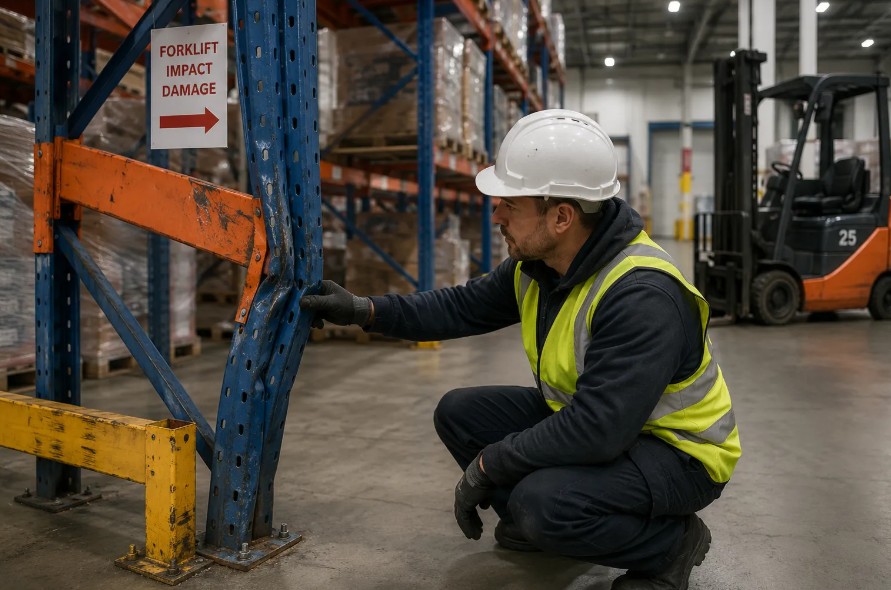
Forklift impact damage is one of the leading reasons pallet racks require repair in warehouse environments. In facilities with narrow aisles, fast-moving inventory cycles, or high traffic volumes, minor collisions can occur more often than many operators realize.
Damage usually appears first on rack uprights near aisle corners or loading areas. Bent columns, twisted braces, and cracked welds may seem cosmetic at first, but these issues can weaken the rack’s ability to support loads safely. Repeated low-speed impacts can also create cumulative stress that becomes more serious over time.
Many warehouse operators focus on immediate operational continuity and delay repairs if the damage does not appear severe. However, compromised structural components increase the likelihood of load instability and can affect adjacent rack sections as well.
Facilities that conduct regular warehouse safety inspections are generally more likely to identify impact-related damage before it escalates into a larger operational hazard.
Overloaded Storage Systems Create Long-Term Structural Stress
Warehouse rack damage is not always caused by visible collisions. In many cases, problems develop gradually because storage systems are carrying loads beyond their intended capacity.
Changes in product dimensions, pallet weights, or storage configurations can place unexpected strain on rack beams and uprights. Distribution centers that evolve quickly may continue using older rack layouts that were not designed for current inventory demands.
Common warning signs include:
- Deflected beams
- Misaligned frames
- Loose anchor bolts
- Cracked base plates
- Uneven load distribution
These conditions often develop slowly, making them harder to identify during routine operations. Overloaded systems may continue functioning for months before visible structural deformation appears.
Storage system maintenance plays a major role in preventing this type of damage. Facilities that review load capacities regularly and adjust layouts as inventory changes are generally better positioned to avoid preventable repairs.
Environmental Conditions Can Accelerate Rack Deterioration
Toronto warehouses operate in a range of environmental conditions that can affect steel racking systems over time. Temperature fluctuations, moisture exposure, and floor deterioration can all contribute to structural wear.
In facilities where loading docks remain open during winter months, condensation and moisture buildup may increase the risk of corrosion near rack bases. Damaged flooring can also affect rack alignment, particularly in older warehouse environments where heavy equipment traffic causes gradual concrete wear.
Poor floor conditions create additional stress points throughout the storage system. Even slight shifts in rack positioning can affect load balance and increase vulnerability during forklift operations.
Distribution center safety programs often focus heavily on operational procedures, but environmental maintenance is equally important for preserving rack integrity.
Why Temporary Fixes Often Create Larger Safety Risks
Some warehouse operators attempt temporary solutions after discovering rack upright damage. These may include improvised bracing, partial component replacements, or isolating damaged areas without fully addressing the structural issue.
While these approaches may appear cost-effective in the short term, they can create additional liability and safety concerns. Damaged racking systems are subject to strict safety expectations during warehouse compliance inspections, particularly in high-volume logistics environments.
Repairs should address both the visible damage and the underlying structural integrity of the system. In many cases, the decision between rack repair vs replacement depends on the extent of the damage, the age of the system, and whether the affected components still meet engineering requirements.
When damage affects load-bearing components, certified repair services are often necessary to restore the system safely. Companies such as LogiSERV provide engineer-certified assessments and racking repair toronto services for warehouse operators dealing with structural rack damage and compliance concerns.
Consistent Damage Reporting Helps Prevent Escalating Problems
Rack damage reporting procedures are an important part of warehouse safety management. Employees working near storage systems are often the first to notice bent frames, beam displacement, or impact-related damage.
Without a clear reporting process, smaller issues may remain unaddressed until inspections uncover more serious structural concerns. Delayed reporting also increases the chance that damaged racks will continue supporting active loads.
Facilities that prioritize routine inspections and employee reporting tend to identify problems earlier, allowing repairs to be completed before operational disruptions occur. This approach not only supports pallet rack safety but also reduces the likelihood of emergency repairs or unplanned downtime.
As warehouse operations continue to grow across Toronto, maintaining safe and reliable storage infrastructure remains an essential part of long-term facility management.